
Ready to Get Started?
Schedule a consultation with our expert HVAC technicians and get a quote for your HVAC project.
After months of heavy cooling, end of summer AC maintenance gives Idaho homeowners an opportunity to catch wear, airflow problems, and efficiency issues before they turn into more expensive repairs or carry over into the next cooling season.
By late summer, your air conditioner has already handled some of the toughest conditions it will face all year. Long cooling cycles, dust, outdoor debris, dirty filters, and repeated starts and stops can all take a toll on system performance. Even if your AC is still keeping the house comfortable, small problems may be developing behind the scenes.
That is especially important throughout Boise and the Treasure Valley, where August remains a serious cooling month rather than the immediate end of AC season. Taking time to inspect your system now can help you finish the warm season with reliable cooling while giving you an opportunity to address problems before they become emergencies.
Why End of Summer Is a Smart Time to Check Your AC
It can be tempting to assume that once August arrives, your air conditioner has made it through the most important part of the year. In reality, late summer is one of the best times to evaluate how the system has performed.
Boise's long-term climate data shows why. August remains hot, with normal daytime temperatures frequently requiring substantial air conditioning. Your cooling equipment may still have weeks of meaningful work ahead of it.
At the same time, the system has already accumulated much of the wear associated with the cooling season. That combination makes late summer useful for spotting problems that were not obvious in spring.
Think back over the last several weeks.
Did the AC run for noticeably longer periods?
Did certain rooms become harder to cool?
Did your utility bills increase more than expected?
Did you hear noises that were not present earlier in the season?
Did the system struggle during the hottest afternoons?
Those observations can tell you a great deal about the condition of your equipment. If the system has been showing signs of trouble, scheduling professional AC maintenance now can help determine whether routine service is enough or whether a repair should be addressed before the problem becomes more serious.
What Months of Heavy Cooling Can Reveal
Air conditioning problems do not always appear as sudden system failures. Many develop gradually.
A filter becomes increasingly restricted. Dirt collects on coils. An electrical component begins to weaken. A condensate drain starts flowing more slowly. Airflow becomes less consistent. The system still runs, so the changes are easy to overlook.
Late summer provides a useful checkpoint because the AC has operated long enough for these weaknesses to become more noticeable.
ENERGY STAR identifies dirt and neglect as major causes of heating and cooling system failure and inefficiency. Regular maintenance helps equipment operate more effectively and can reduce the likelihood of unwanted problems.
That means the goal is not simply to ask, "Is my AC running?"
A better question is, "How well has my AC been running after a full summer of use?"
Start With the Air Filter

One of the simplest end of summer AC maintenance tasks is also one of the most important: check the air filter.
During Idaho's cooling season, your HVAC system can move a tremendous amount of air through the home. The filter captures airborne particles before they circulate through the equipment and ductwork, but that also means it gradually becomes loaded with dust and debris.
A dirty filter restricts airflow and forces the HVAC system to work harder to move conditioned air throughout the house. HVAC filters are best checked monthly and replaced or cleaned when dirty.
Signs Your Filter Needs Attention
Check the filter sooner rather than later if you notice:
- Visible dust or discoloration across the filter
- Reduced airflow from supply vents
- Longer cooling cycles
- More dust accumulating inside the home
- Rooms taking longer to reach the thermostat setting
- Higher cooling costs without an obvious explanation
Do not judge the filter only by how long it has been installed. Homes with pets, remodeling dust, wildfire smoke, open windows, or higher indoor particle levels may require more frequent changes.
Replacing a dirty filter is inexpensive compared with the strain that restricted airflow can place on the system.
Inspect the Outdoor Condenser After a Dusty Idaho Summer
Your outdoor condenser has spent the summer exposed to everything happening around your home.
Dust, grass clippings, weeds, leaves, cottonwood debris, and other material can collect around the unit or against the coil surfaces. When airflow around the condenser becomes restricted, releasing heat outdoors becomes more difficult.
A simple visual inspection is a useful homeowner maintenance step.
Walk around the condenser and look for:
- Tall weeds or vegetation growing against the unit
- Leaves and yard debris around the base
- Grass clippings stuck to the exterior
- Items stored too close to the equipment
- Obvious dirt buildup
- Bent or visibly damaged exterior fins
- Signs of physical damage
Keep the surrounding area clear so the equipment has adequate room for airflow.
Homeowners should avoid taking the cabinet apart or attempting internal electrical work. If the condenser is heavily soiled or you suspect a performance issue, professional maintenance is the safer approach.
For Boise homeowners, the local climate makes this particularly relevant. Dry summer conditions can mean plenty of airborne dust and outdoor debris. Arctic Air provides heating and cooling services throughout its Boise, ID service area as well as communities across the Treasure Valley.
Pay Attention to Airflow Throughout the House
A properly operating air conditioner does more than produce cold air. It must move that conditioned air effectively through the home.
Walk through your house while the AC is running and compare airflow from room to room.
One room does not need to feel exactly like another, but major differences deserve attention. A bedroom that suddenly feels warmer than it did earlier in the summer or a vent producing noticeably weaker airflow can point toward a developing issue.
Potential causes can include a dirty filter, blocked or closed vents, duct problems, blower performance issues, or other system conditions that require diagnosis.
Homeowners should first make sure furniture, rugs, curtains, or other household items are not blocking supply or return vents. If nothing obvious explains the change, have the system evaluated rather than simply lowering the thermostat.
If weak airflow is accompanied by poor cooling, unusual operation, or a system that cannot maintain the set temperature, professional AC repair may be appropriate.
End-of-Summer AC Check: What You Can Inspect
This quick inspection can help separate basic homeowner maintenance from symptoms that warrant professional attention.
Check Your Energy Bills for Signs of Declining AC Efficiency
Your utility bills can provide useful clues about how your air conditioner performed during the summer.
Cooling costs naturally change with outdoor temperatures, so a higher bill during an especially hot month does not automatically mean something is wrong. However, a noticeable increase compared with similar periods, particularly when thermostat settings and household habits have remained consistent, may indicate that the system is working harder than it should.
Several conditions can contribute to declining efficiency:
- Restricted airflow from a dirty filter
- Dirty indoor or outdoor coils
- Refrigerant problems
- Aging motors or electrical components
- Duct leakage
- Thermostat issues
- General wear from prolonged operation
If your air conditioner seems to run longer than it did earlier in the season, struggles to reach the thermostat setting, or cycles frequently without maintaining consistent comfort, do not assume the system simply needs to work harder because it is August.
These symptoms are worth investigating.
The related guide on signs your air conditioner is working too hard can help Idaho homeowners recognize additional warning signs before they develop into more significant problems.
Compare Performance, Not Just the Dollar Amount
Utility rates and weather conditions can change, so looking only at the total dollar amount on your electric bill does not tell the whole story.
Instead, consider how your AC has behaved throughout the summer.
Ask yourself:
- Has the system been running for increasingly long periods?
- Does the house take longer to cool down?
- Are you lowering the thermostat more often to feel comfortable?
- Are certain rooms consistently warmer?
- Does the AC seem to operate almost continuously during the afternoon?
- Has airflow become weaker?
A combination of higher energy use and declining comfort is more concerning than either symptom by itself.
End of summer AC maintenance gives a technician an opportunity to evaluate these performance changes while the system is still being used regularly.
Listen for Sounds That Were Not There Earlier in the Summer
After living with an HVAC system for several years, most homeowners become familiar with its normal operating sounds.
You may hear the outdoor condenser start, air moving through the vents, and the indoor blower operating. These sounds alone are generally not cause for concern.
New or noticeably different noises deserve more attention.
Listen for:
- Rattling
- Grinding
- Buzzing
- Squealing
- Clicking that continues after startup
- Banging or clanking
- Unusually loud vibration
A noise does not identify a specific problem by itself. Different components and conditions can create similar sounds, which is why diagnosing HVAC equipment based solely on noise can be misleading.
What matters is recognizing that something has changed.
If a system that operated quietly in June is noticeably louder by August, months of operation may have exposed a loose, worn, or failing component.
Do not open electrical panels or attempt to repair internal components yourself. HVAC equipment contains high-voltage electrical parts and other components that should be inspected by a qualified technician.
Check Around the Indoor Unit for Moisture and Drainage Problems
Air conditioners do more than lower indoor temperature. During cooling operations, they also remove moisture from the air.
That moisture normally collects at the evaporator coil and exits through the condensate drainage system. When the drain becomes clogged or another drainage problem develops, water can collect where it should not.
As part of your end of summer AC maintenance check, inspect the accessible area around the indoor HVAC equipment.
Look for:
- Standing water
- Damp areas around the unit
- Water stains
- A full or overflowing drain pan
- Unusual musty odors
- Signs of repeated moisture around nearby flooring or walls
If you find water where it does not normally belong, do not ignore it simply because cooling season is nearing its end.
Drainage problems can potentially cause water damage and may also indicate that the system requires service.
A professional maintenance visit typically includes checking the condensate drain and evaluating whether the system is removing and draining moisture properly.
Do Not Ignore Uneven Cooling That Developed During Summer

One bedroom stays warm while the living room feels comfortable. The upstairs takes much longer to cool than it used to. A room that felt fine in June suddenly becomes uncomfortable every afternoon in August.
Uneven cooling can become particularly noticeable late in the season because the HVAC system has spent months operating under demanding conditions.
The cause is not always the air conditioner itself.
Temperature differences throughout a home may be influenced by:
- Airflow restrictions
- Dirty filters
- Closed or blocked vents
- Duct leakage
- Insulation differences
- Solar heat gain
- Thermostat location
- HVAC system performance
Start with the basics. Make sure vents are open and unobstructed, check the filter, and consider whether anything in the room has changed.
If the problem continues, professional airflow and HVAC evaluation can help identify the underlying cause.
Persistent comfort problems should not automatically be carried into next summer. Documenting them now, while you can observe the system operating under warm-weather conditions, gives your HVAC technician more useful information to work with.
Check Whether Your AC Is Short Cycling
An air conditioner normally operates in cycles. It turns on, cools the home toward the thermostat setting, shuts off, and starts again when additional cooling is needed.
If the system repeatedly starts and stops after unusually short periods, it may be short cycling.
Possible causes range from relatively simple issues to conditions that require professional diagnosis. A dirty filter, thermostat problem, electrical issue, system sizing concern, or other equipment problem may contribute.
Short cycling matters because frequent starts can increase wear while preventing the system from completing effective cooling cycles.
Pay attention to the pattern rather than trying to diagnose the cause yourself.
If your AC seems to start and stop far more frequently than it did earlier in the summer, schedule an inspection.
The same principle applies at the other extreme. A system that runs almost continuously but cannot maintain the thermostat setting may also need attention.
Idaho homeowners dealing with a system that cannot maintain comfortable temperatures can also review what to do when an AC is not keeping up.
Review Your Thermostat Settings and Performance
The thermostat is easy to overlook during an HVAC inspection because it is small compared with the rest of the system. Yet it controls when your cooling equipment operates and plays an important role in indoor comfort.
Near the end of summer, check whether the thermostat appears to be responding normally.
Consider whether:
- The displayed indoor temperature seems accurate
- The AC responds when you change the temperature setting
- Programmed schedules still match your family's routine
- The system is running at unexpected times
- The thermostat frequently loses settings or power
- Rooms feel significantly warmer or cooler than the displayed temperature suggests
If you use a programmable or smart thermostat, the transition toward fall is also a good time to review your schedule.
School routines, work schedules, daylight hours, and outdoor temperatures may all change as summer ends. A schedule designed for July may no longer make sense in September.
Avoid extreme thermostat adjustments in an attempt to cool the house faster. Setting the thermostat substantially lower does not correct an underlying performance problem.
End-of-Summer Warning Signs: Monitor or Schedule Service?
Not every unusual observation requires an emergency HVAC call. At the same time, waiting until a minor concern becomes a complete system failure can lead to a more inconvenient and potentially more expensive repair.
Use the following general guide to determine your next step.
The key is to distinguish simple homeowner maintenance from symptoms that require technical diagnosis.
Consider What This Summer Revealed About Your AC System
End of summer AC maintenance is not only about cleaning and inspecting equipment. It is also an opportunity to evaluate how well your air conditioner handled the season as a whole.
Think about your home's comfort during the hottest weeks of summer.
Did your AC maintain the thermostat setting reliably? Did certain rooms become uncomfortable? Did the system require repairs? Did cooling costs increase noticeably? Did you find yourself lowering the thermostat more often just to stay comfortable?
An occasional issue does not necessarily mean the system is nearing the end of its life. However, several performance problems occurring together can indicate that the equipment deserves a more thorough evaluation.
This becomes especially important with older systems.
A system that has required repeated repairs, operates inefficiently, and struggles during hot weather may need more than routine maintenance before another Idaho summer arrives.
Look at the System's Repair History
It is easy to evaluate each HVAC repair as a separate event. Looking at the overall pattern often provides more useful information.
Consider how many service calls your AC has required over the last two or three cooling seasons.
A single capacitor replacement or minor electrical repair does not necessarily indicate a larger problem. Several repairs involving different components, combined with declining performance, deserve closer attention.
Review any invoices or service records you have and note:
- What was repaired
- When the repair occurred
- How much it cost
- Whether the same problem returned
- Whether comfort improved afterward
- Whether additional problems appeared later
These records can help an HVAC technician evaluate the system's overall condition instead of focusing only on the immediate symptom.
If late-summer maintenance uncovers a significant problem in an aging system, homeowners can use Arctic Air's guide on when to repair vs. replace your air conditioner to better understand the factors involved in that decision.
That does not mean every older air conditioner should be replaced. Age, repair history, efficiency, equipment condition, and the cost of the required repair should all be considered together.
End of Summer Is Also a Good Time to Look at Indoor Air Quality
Your HVAC system has circulated indoor air throughout the house for months. By late summer, homeowners may notice dust accumulation, stale indoor air, or increased sensitivity to airborne particles.
The first step is still straightforward: inspect the HVAC filter and replace it when needed.
However, homeowners experiencing persistent indoor air quality concerns may want to look beyond the filter.
Potential contributors can include:
- Dust and debris
- Pet dander
- Outdoor particles entering the home
- Inadequate filtration
- Indoor humidity conditions
- Dirty HVAC components
- Air circulation issues
The appropriate solution depends on the source of the problem. Simply purchasing the highest-rated filter available is not always the right answer because filters need to be compatible with the HVAC system and its airflow requirements.
A professional can help evaluate filtration and other indoor air quality options without unnecessarily restricting system airflow.
Should You Schedule Professional Maintenance Now or Wait Until Spring?
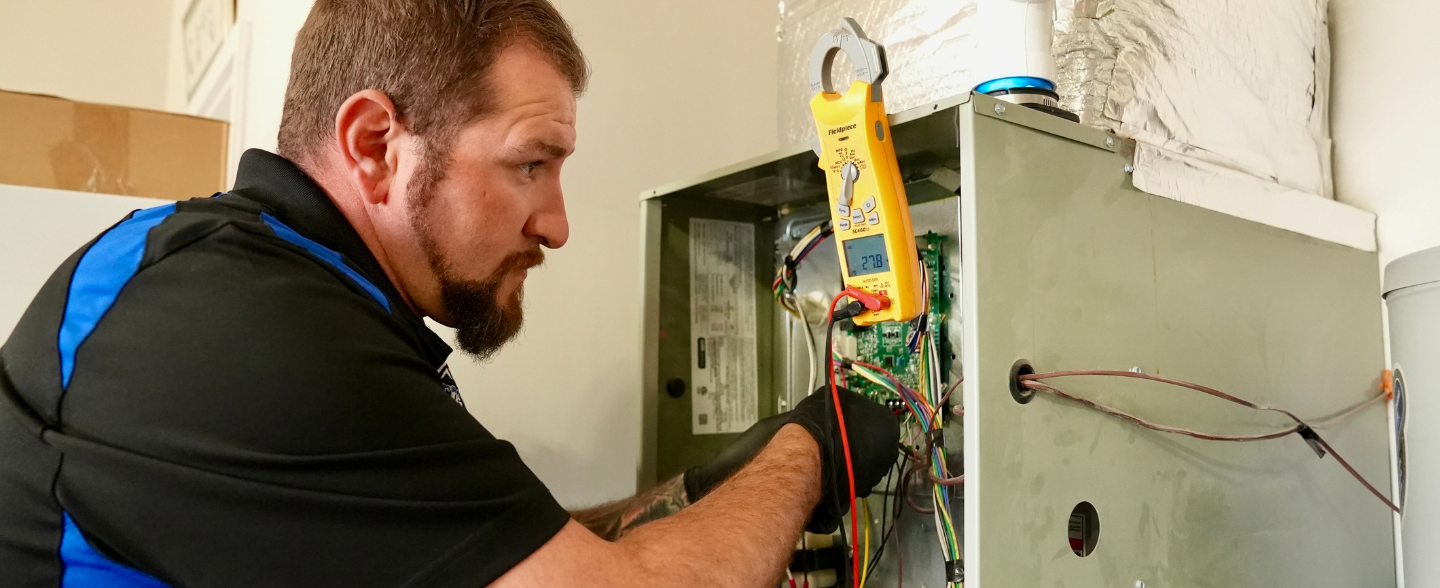
Spring is a popular time for AC maintenance because homeowners want to prepare their equipment before summer begins.
That does not mean late-summer maintenance has no value.
If your AC has experienced a demanding season, has shown unusual symptoms, or has not been professionally maintained recently, waiting several more months may allow an existing problem to remain unresolved.
Professional end of summer AC maintenance can be particularly useful when:
- The system has struggled during hot weather
- Cooling bills increased unexpectedly
- Airflow has weakened
- You have noticed unusual noises
- The system has been short cycling
- Water or drainage concerns have appeared
- The AC required repairs during the summer
- Annual maintenance was skipped earlier in the year
If the system has operated normally and has already received appropriate annual maintenance, your HVAC professional can advise whether another complete tune-up is necessary.
The goal is not to schedule unnecessary service. It is to avoid carrying known or suspected problems into another season.
What a Professional End-of-Summer AC Inspection Can Include
Homeowners can safely perform several visual checks themselves, but professional HVAC maintenance goes further.
Depending on the equipment and its condition, a technician may evaluate areas such as:
- Air filter condition
- Thermostat operation
- Electrical connections and components
- Condenser and evaporator coils
- Refrigerant-related system performance
- Blower operation
- Airflow
- Condensate drainage
- System controls
- Overall cooling performance
Professional service is especially important when diagnosis requires opening equipment, testing electrical components, or evaluating refrigerant-side operation.
A homeowner can identify that airflow feels weak. A trained technician can investigate why.
A homeowner can hear a new noise. A technician can inspect the components that may be producing it.
That distinction is important. Your end-of-summer checklist should help you identify changes, not encourage unsafe DIY repairs.
Prepare for the Transition From Cooling to Heating
Idaho's seasonal transitions can happen quickly. Your air conditioner may still be working hard in late August, while cooler mornings begin appearing not long afterward.
As cooling demand gradually decreases, start thinking about the HVAC system as a whole rather than treating the AC and heating equipment as completely separate concerns.
Simple transition tasks include:
- Continue checking the HVAC filter
- Keep supply and return vents unobstructed
- Review thermostat schedules as outdoor temperatures change
- Pay attention to unusual HVAC operation
- Keep the area around indoor equipment accessible
- Schedule heating maintenance before consistent cold weather arrives
Do not cover or shut down the outdoor AC equipment prematurely while cooling may still be required. Follow manufacturer guidance and recommendations from your HVAC professional for your particular system.
Finishing the cooling season properly gives you a cleaner transition into fall and helps prevent forgotten AC concerns from resurfacing next spring.
Frequently Asked Questions About End of Summer AC Maintenance
Is the end of summer a good time for AC maintenance?
Yes. Late summer can be a useful time to inspect how your air conditioner has handled months of operation, particularly if you skipped spring maintenance or noticed performance problems during the cooling season. It also allows developing issues to be addressed rather than ignored until next year.
Should I replace my AC filter at the end of summer?
Check it rather than automatically relying on a fixed replacement schedule. If the filter is dirty or restricted, replace or clean it according to the filter and equipment manufacturer's instructions. Homes with pets, dust, smoke, or other airborne particles may require more frequent filter attention.
Should I clean my outdoor AC unit myself?
Homeowners can generally keep accessible leaves, weeds, and other debris away from the exterior of the condenser. Avoid dismantling the equipment, working around electrical components, or using cleaning methods that could damage the coil. More extensive cleaning should be handled professionally.
Why is my AC running longer at the end of summer?
Longer operation can sometimes be explained by very hot outdoor temperatures, but it may also be associated with restricted airflow, dirty components, equipment problems, or other conditions affecting performance. If runtime has changed noticeably or the system cannot maintain the thermostat setting, have it evaluated.
Can I wait until next spring to fix a minor AC problem?
That depends on the problem. Known issues should not automatically be ignored because summer is ending. Some problems can worsen, affect other components, or be forgotten until cooling is needed again. A professional diagnosis can determine whether repair should be completed now.
What are the most important end of summer AC maintenance checks?
Start with the filter, outdoor condenser clearance, airflow, cooling performance, thermostat operation, condensate drainage, unusual noises, and changes in energy use. Persistent or abnormal symptoms should be evaluated professionally.
How often should an air conditioner receive professional maintenance?
Annual professional maintenance is commonly recommended for residential cooling equipment. The appropriate schedule can vary according to the equipment, manufacturer recommendations, operating conditions, and system history.
Give Your AC a Strong Finish to the Idaho Cooling Season
Your air conditioner does not need to stop working completely before it deserves attention.
Months of summer operation can reveal airflow restrictions, dirty components, drainage problems, unusual cycling, declining efficiency, and other warning signs that are easy to overlook while the system continues producing cool air.
A thoughtful end of summer AC maintenance check gives Idaho homeowners a chance to identify those concerns while the cooling season is still fresh in mind.
Start with the tasks you can safely handle yourself. Check the filter. Inspect the outdoor unit. Compare airflow throughout the house. Review cooling performance and energy use. Look for moisture around indoor equipment and listen for changes in system operation.
When something does not seem right, professional evaluation can help determine whether the system needs routine maintenance, repair, or further attention.
Taking care of those concerns now can help you finish the remaining warm weather more comfortably and enter the next cooling season with fewer unanswered questions.
Arctic Air serves homeowners throughout Boise, Caldwell, Nampa, Meridian, Eagle, and the surrounding Treasure Valley. If your AC has shown signs of wear after a long Idaho summer, schedule an evaluation so your system can receive the attention it needs before another demanding cooling season arrives.