
Ready to Get Started?
Schedule a consultation with our expert HVAC technicians and get a quote for your HVAC project.
Wondering when to replace a furnace before an Idaho winter? Age, repair history, heating performance, and reliability can all help you decide.
A furnace rarely chooses a convenient time to stop working. For Idaho homeowners, a heating problem that seems manageable in early fall can become much more disruptive once colder weather settles in and the furnace is running every day.
That does not mean an older furnace should automatically be replaced. Many heating problems can be repaired, and a well-maintained system may continue providing dependable heat for years. The more useful question is whether repairing the furnace still makes sense based on its age, condition, repair history, and ability to keep your home comfortable.
Understanding those factors before winter gives you more time to evaluate your options instead of making a rushed decision when your home is already cold.
Quick Summary
If you're trying to determine when to replace a furnace, here are the most important factors to consider before Idaho's colder weather arrives:
- The age and overall condition of your furnace
- How frequently the system has needed repairs
- The cost and significance of the current repair
- Whether the furnace heats your home consistently
- Changes in system reliability or performance
- Whether problems return after previous repairs
- How well the existing furnace meets your current comfort needs
- Whether you would rather plan replacement before winter than deal with an unexpected failure
An older furnace does not automatically need replacement, and a single repair does not necessarily mean the system has reached the end of its useful life. The decision becomes clearer when several concerns begin occurring together. Looking at the furnace's age, repair history, performance, and overall condition can help you decide whether another repair or planned replacement makes more sense.
How Do You Know When to Replace a Furnace?
There is no single rule that applies to every home.
Two furnaces of the same age can be in very different condition. One may have received regular maintenance and relatively few repairs, while the other may have a history of breakdowns and declining performance.
That is why deciding when to replace a furnace requires looking beyond the number on the equipment label.
For many homeowners, the decision starts when the furnace develops a problem. At that point, the question is whether repairing the existing equipment provides reasonable value or whether the repair is simply postponing a replacement that is becoming increasingly likely.
A professional furnace repair evaluation can help identify what has failed and provide a clearer picture of the system's overall condition.
The important distinction is between an isolated problem and a pattern.
A furnace that has operated reliably for years and suddenly needs one reasonable repair presents a very different situation from an aging furnace that has required several repairs over a relatively short period.
Start With the Furnace's Age

Age is one of the first factors homeowners consider, but it should not be treated as an automatic replacement deadline.
As heating equipment gets older, normal wear accumulates across its components. An older system may still work, but its age becomes more important when it is combined with recurring repairs, inconsistent heating, unusual operation, or other performance concerns.
Instead of asking only, “How old is my furnace?” ask:
- Has the furnace remained reliable?
- Has it required increasingly frequent service?
- Does it still heat the house comfortably?
- Are repairs becoming more significant?
- Is the system showing several signs of deterioration at once?
If an older furnace is operating reliably and a technician finds no major concerns, immediate replacement may not be necessary. If age is accompanied by repeated problems, however, replacement deserves a closer look.
Frequent Furnace Repairs Can Change the Equation
Every mechanical system eventually requires service. One repair alone is not a reason to replace an otherwise dependable furnace.
Repeated repairs are different.
If you find yourself calling an HVAC technician every heating season, or multiple times within a relatively short period, consider what those repairs are telling you about the system as a whole.
The individual repair bills matter, but so does the pattern.
A furnace that repeatedly develops problems can create costs and inconvenience beyond the price of individual replacement parts. There is also the uncertainty of not knowing whether the next problem will happen during mild fall weather or during a cold Idaho night when the system is needed most.
This is where repair history becomes useful.
Keep track of what has been repaired, how frequently service has been required, and whether the same performance problems continue returning. That information can help you and your HVAC technician evaluate whether another repair is a sensible investment.
Consider the Current Repair in Context
The cost of a repair should not be considered in isolation.
Suppose an otherwise reliable furnace needs a repair and the equipment is still in good overall condition. Repairing it may be an easy decision.
Now consider the same repair on an older furnace that has already needed several service calls, struggles to maintain comfortable temperatures, and has other components showing wear. The repair may restore operation, but it does not necessarily resolve the larger question about the furnace's remaining reliability.
Before approving a significant repair, consider:
- How old is the furnace?
Age alone does not determine the answer, but it provides useful context. - What is being repaired?
A relatively minor component problem is different from a more substantial equipment issue. - What has already been repaired?
Multiple recent repairs can indicate a developing pattern. - What is the rest of the system's condition?
Fixing one component does not restore every other component to new condition. - How has the furnace been performing?
Reliability, comfort, airflow, and heating consistency should be part of the decision. - Would you be comfortable investing in another repair if something else failed soon afterward?
This can help put the immediate repair cost into a longer-term perspective.
Pay Attention to Declining Heating Performance

A furnace does not have to stop running completely before replacement becomes worth considering.
Sometimes the change is gradual.
Perhaps the house takes longer to warm up than it once did. Certain rooms may become harder to keep comfortable. The furnace may seem to run more frequently, or you may notice that you are adjusting the thermostat more often to get the same level of comfort.
These changes can have several causes, and some may be repairable. Airflow restrictions, thermostat problems, ductwork concerns, maintenance issues, and individual component failures can all affect heating performance.
That is why poor performance should be diagnosed rather than automatically treated as proof that you need a new furnace.
However, when declining performance occurs alongside advanced equipment age and repeated repairs, it becomes more relevant to the replacement decision.
Arctic Air already has a useful resource for homeowners whose furnace is blowing cold air.
In this article, the larger issue is not one particular symptom. It is whether your furnace continues to provide the dependable heating performance you need from it.
Furnace Repair vs. Replacement: Look Beyond Today's Problem
One of the hardest decisions for a homeowner is determining whether to repair an existing furnace or put that money toward replacement.
There is no universal answer. A repair that makes sense for one furnace may not make sense for another.
The goal is to look beyond the immediate problem and consider what you are likely to get from the repair. If the furnace is otherwise dependable and in good condition, repairing a failed component may provide years of additional service. If the system has become increasingly unreliable, another repair may only address the latest problem.
When Furnace Repair May Make Sense
Repair may be worth considering when:
- The furnace has generally been reliable
- The current problem is isolated
- The system still heats the home effectively
- There is no pattern of repeated breakdowns
- The furnace is otherwise in good condition
- The repair is reasonable compared with the condition of the equipment
A professional diagnosis is important because symptoms alone do not always reveal the seriousness of the problem.
When Replacement Deserves a Closer Look
Replacement becomes a more relevant conversation when several concerns begin occurring together.
For example, an older furnace may still be operating, but perhaps it has required several repairs, no longer heats the home as evenly as it once did, and leaves you wondering whether it will make it through another Idaho winter.
At that point, the question changes from “Can this furnace be repaired?” to “Does continuing to repair this furnace still make sense?”
That distinction matters. Many older furnaces can technically be repaired. The homeowner still needs to decide whether that repair represents reasonable long-term value.
Repair or Replace Your Furnace?
The following comparison can help organize the factors you may want to discuss with your HVAC technician.
| Factor | Repair May Make Sense | Replacement May Be Worth Considering |
|---|---|---|
| Furnace age | System is not especially old and remains in good condition | System is older and showing other signs of decline |
| Repair history | Few previous repairs | Repairs are becoming more frequent |
| Current problem | Isolated or relatively straightforward issue | Significant problem combined with other system concerns |
| Heating performance | Home remains comfortable and heats consistently | Uneven temperatures or declining performance continue |
| Reliability | Furnace has generally been dependable | You are increasingly concerned about another breakdown |
| Overall condition | Major components remain in good condition | Multiple components show age or wear |
| Long-term plans | Existing system still meets your needs | You want to improve or update your heating system |
The table is meant as a decision aid, not a diagnosis. A technician should evaluate the actual equipment before you decide whether repair or replacement is appropriate.
Think About Reliability Before Idaho's Coldest Weather
Reliability can be difficult to put a dollar value on, but it matters when deciding when to replace a furnace.
A furnace that works most of the time may seem good enough during mild weather. That calculation can feel very different when temperatures fall and dependable heat becomes essential.
Ask yourself how confident you are in the system going into another heating season.
If the furnace has been dependable and receives regular heating maintenance, there may be little reason to replace it simply because it is getting older. If you have spent the last few winters wondering what will fail next, however, reliability should become part of the replacement conversation.
Why Replacing a Furnace Before Winter Can Make Sense
A planned furnace replacement and an emergency replacement begin with the same basic objective: getting dependable heat into your home. The experience of getting there can be very different.
Planning before winter gives you time to understand your options.
You can evaluate equipment, ask questions, consider your budget, and schedule the work without making every decision because your home currently has no heat.
It also gives your HVAC contractor an opportunity to evaluate more than the old furnace itself. Proper furnace replacement involves considering the home's heating needs, equipment sizing, airflow, duct connections, controls, and other installation requirements.
If replacement is the right choice, professional furnace installation should focus on selecting and installing equipment appropriate for the home rather than simply replacing one box with another.
That does not mean every homeowner with an older furnace should rush to replace it in fall. It means homeowners who already have strong reasons to expect replacement soon may benefit from making the decision before winter forces it.
Consider More Than the Purchase Price
Cost naturally plays a major role in deciding whether to replace a furnace.
The comparison, however, should not be limited to the price of today's repair versus the price of new equipment.
Consider what each option gives you.
Repairing the furnace may be the more economical choice when it restores a reliable system to normal operation. Replacement may deserve more consideration when the repair is being made to equipment that already has a history of problems or no longer meets the home's needs.
Your household budget matters too. If replacement appears likely, planning ahead may give you more time to consider equipment choices and available financing and payment options rather than addressing those questions during an unexpected loss of heat.
The goal is not to justify replacement at any cost. It is to compare the likely value of both options with a clear understanding of the furnace you currently have.
What Happens When You Decide to Replace Your Furnace?
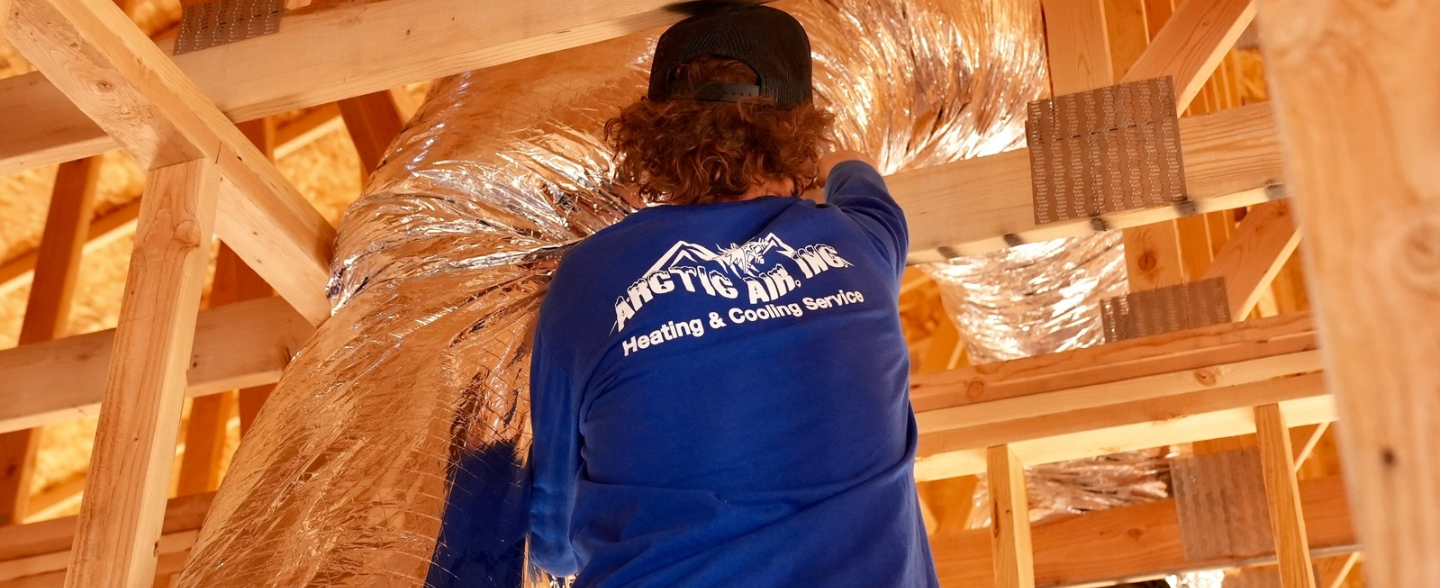
Once you determine that replacement makes sense, choosing new equipment is only part of the process.
A furnace needs to be appropriate for the home's heating requirements and installed correctly. Bigger equipment is not automatically better, and simply purchasing a high-efficiency model does not guarantee comfortable or efficient operation.
An HVAC professional may need to consider factors such as:
- Home size and layout
- Existing heating equipment
- Ductwork and airflow
- Insulation and heat loss
- Venting and system connections
- Thermostat and controls
- Household comfort concerns
- Equipment efficiency
- Budget and long-term plans
These details help determine what type of furnace makes sense for the property.
Homeowners should also understand what is included with the installation, what equipment is being recommended, applicable warranty information, and how to operate and maintain the new system.
Do Not Wait for a Complete Breakdown to Ask Questions
One of the biggest advantages of recognizing the signs of an aging furnace is simply having time.
You do not have to commit to replacement because you ask an HVAC professional about it.
If your furnace is older or has developed a pattern of repairs, you can have the equipment evaluated and start learning what replacement would involve. If the system still has useful service life remaining, you can continue using it with a clearer understanding of its condition.
If replacement appears increasingly reasonable, you can plan for it.
That is a much better position than trying to learn about furnace sizing, equipment options, installation, and cost for the first time after the system has stopped heating the house.
Frequently Asked Questions About Furnace Replacement
How do I know when to replace a furnace?
Consider the furnace's age, condition, repair history, heating performance, and reliability together. An older furnace with recurring repairs and declining performance provides a stronger case for replacement than age alone.
Should I replace my furnace just because it is old?
Not necessarily. Age is an important factor, but it should be considered alongside condition and performance. An older furnace that remains reliable is different from one experiencing repeated breakdowns.
Is it better to repair or replace a furnace?
It depends on the specific system. Repair can make sense when the problem is isolated and the furnace remains in good overall condition. Replacement becomes more relevant when repairs are frequent, the equipment is aging, and performance or reliability is declining.
Should I replace my furnace before winter?
If your furnace is already showing strong indications that replacement will soon be necessary, planning the work before winter can give you more time to evaluate equipment and schedule installation. A furnace that remains reliable does not need to be replaced simply because winter is approaching.
Can a furnace still need replacement if it is running?
Yes. Complete failure is not the only reason homeowners consider replacement. A furnace can continue operating while requiring frequent repairs or struggling to provide dependable, consistent heat.
What should I ask before choosing a new furnace?
Ask why the particular equipment is being recommended, how sizing was determined, what the installation includes, what efficiency level is appropriate for your home, what warranties apply, and what maintenance the new furnace will require.
Prepare for Winter With a Furnace You Can Depend On

Knowing when to replace a furnace is less about finding one magic age or waiting for one specific warning sign. It is about recognizing when age, repair history, declining performance, and reliability begin pointing in the same direction.
For Idaho homeowners, making that assessment before the coldest part of winter can provide valuable time to understand the condition of the existing furnace and compare your options.
If repair still makes sense, you can move forward knowing why. If replacement is the better fit for your home, you can plan the project rather than waiting for an unexpected breakdown to make the decision for you.
Arctic Air serves homeowners throughout communities including Nampa, ID, with heating and cooling services designed for Treasure Valley homes. If your furnace has become unreliable or you are unsure whether it makes sense to keep repairing it, contact Arctic Air to have your heating system evaluated and discuss your repair or replacement options before Idaho's colder weather arrives.